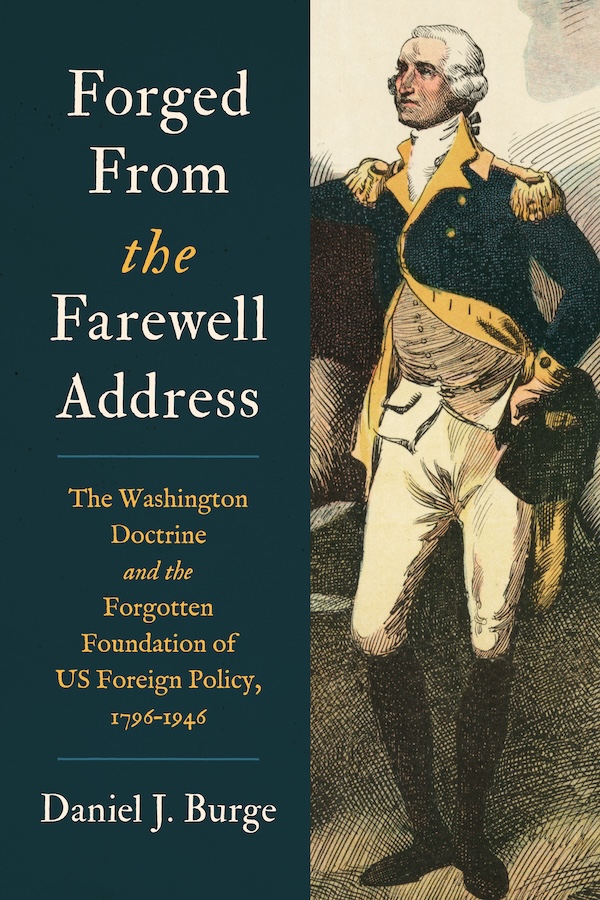
Forged from the Farewell Address
The forgotten doctrine that shaped the US approach to foreign relations for more than one hundred and fifty years
In 1796, as his second term as president drew to a close, George Washington issued a farewell address to the American people. In it, he famously warned against the development of political parties at home and foreign alliances abroad and emphasized the importance of the Union. For 150 years, policymakers and ordinary Americans alike turned to Washington’s Farewell Address for guidance. In the realm of international relations, Washington’s words of advice were soon turned into the Washington Doctrine.
In this book, Daniel Burge uncovers and analyzes the influence of the Washington Doctrine. Tracing it from the War of 1812 to World War II, Burge explains how the Washington Doctrine acted as an effective counterweight to the Monroe Doctrine, as it was consistently deployed by those who believed the United States should avoid intervening abroad. By delving into the fierce debates over whether America should “stand upon foreign ground,” he challenges conventional narratives of American foreign policy, revealing a nation deeply divided over its future and the wisdom of interventionism.
- Keith Beutler, Missouri Baptist University, author of George Washington's Hair: How Early Americans Remembered the FoundersA revelatory, imaginative, deeply-researched work, and a joy to read. It is deftly reasoned and fills significant holes in the historiographies of US foreign policy and memory culture.
Daniel J. Burge holds a PhD in History from the University of Alabama. He is the author of A Failed Vision of Empire: The Collapse of Manifest Destiny, 1845-1872.

