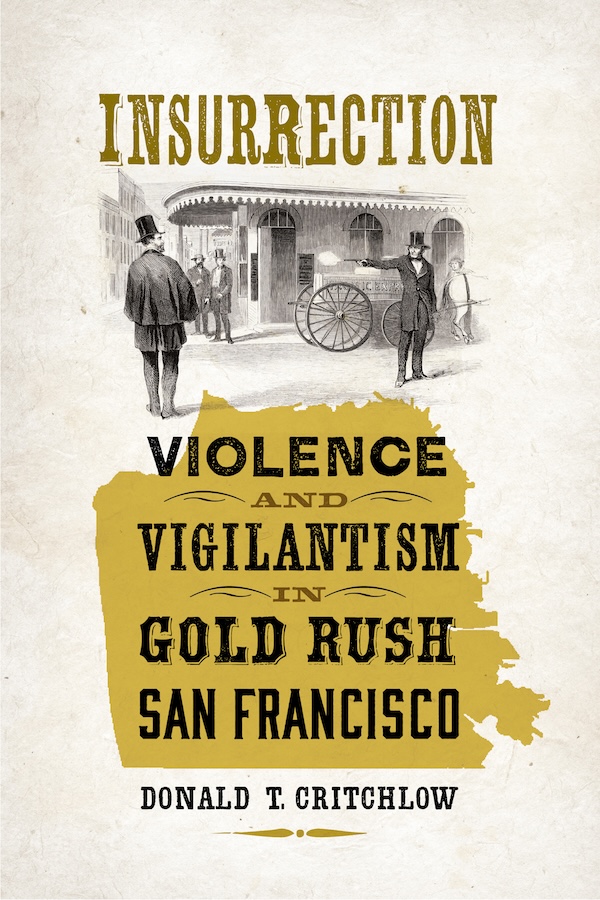
Insurrection
The residents of nineteenth-century San Francisco take the law into their own hands
San Francisco in the 1850s gained a reputation as a city of crime and corruption on a scale almost inconceivable today. In Insurrection, Donald Critchlow narrates the now all-but-forgotten drama that unfolded when California stood on the precipice of armed conflict between popular insurgents in the city and state authorities. The Gold Rush had resulted in a surge of immigration that completely overwhelmed the municipal government’s ability to effectively administer the law. So the city’s leading merchants took it upon themselves to do so. But the resulting insurgency was more than mob justice—the people of San Francisco created an entire vigilante justice system, complete with judges, juries, lawyers for the accused, and cross-examination.
Critchlow, a historian of American populism, explores the singular nature of insurgency in nineteenth-century America through the San Francisco Vigilance Committees of 1851 and 1856, analyzing how the vigilantes understood their actions and the nature of their opponents: a valuable snapshot of Americans’ commonly held opinions of how the law should be enforced and justice enacted. Law and order, Critchlow shows, developed organically from below amid the chaos of Gold Rush California, as the people sought to prevent their frontier society from falling into the grip of criminality and anarchy.
- Sean Wilentz, Princeton University, author of The Politicians and the Egalitarians: The Hidden History of American PoliticsA dramatic story, populated by numerous colorful figures, that will fascinate readers. Critchlow offers a novel interpretation of order and disorder in this singular time and place, one that is bound to spark debate.
Donald Critchlow is Katzin Family Professor of History and Director of the Center for American Institutions at Arizona State University and the author of numerous books, including In Defense of Populism: Social Protest and Democratic Change.

