The Cyclone of Rye Cove
A gripping and deeply moving account of a tragedy and how it has lingered in song and memory
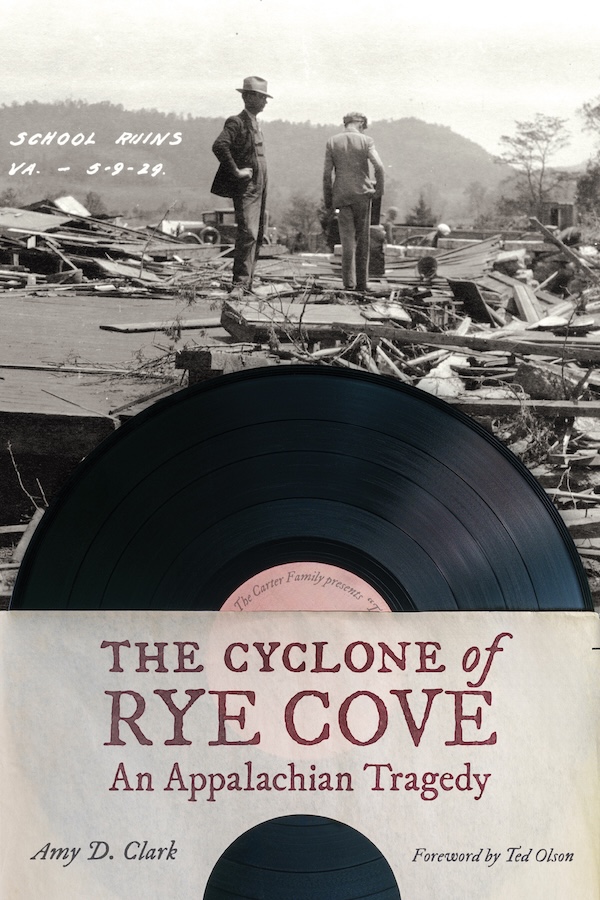
On May 2, 1929, a devastating tornado struck Rye Cove in Scott County, Virginia, destroying a rural school and claiming the lives of twelve children and one teacher. Among those who rushed to the scene was A. P. Carter of the famed Carter Family, whose experience of the tragedy inspired the writing and recording of “The Cyclone of Rye Cove” later that year.
A century after the storm, Amy Clark reconstructs the tornado’s path through the eyes of survivors and their descendants. Drawing on historical records, family memories, news stories, and local oral histories, she follows farmers caught in the storm’s fury, parents desperately searching for their children, and the students and teachers trapped inside the collapsed school. The story also explores the lives of A. P., Sara, and Maybelle Carter, their rise to fame following the legendary 1927 Bristol Sessions, A. P.’s role in the disaster recovery, and the ballad that transformed local tragedy into enduring folk history that resonates across generations.
- Rene Rodgers, Director of the Birthplace of Country Music MuseumWith The Cyclone of Rye Cove, Amy Clark explores a regional story while placing it within a broader history, providing important context to the various elements of this tragedy – from the actual disaster to the Carter family's place in music history to the significance of music and folklore within the community that was affected. As a result, what at first might feel like a niche subject—a lesser-known song about a natural disaster—immediately piqued my interest and deepened my understanding of local history and Appalachia's musical heritage. By connecting the emotional impact of the cyclone's devastation with the song and the related history, Clark transforms a scholarly examination into a relatable and deeply moving account.
Amy D. Clark is Professor of Communication and Founding Director of the Center for Appalachian Studies at the University of Virginia’s College at Wise. She is the coeditor of Talking Appalachian: Voice, Identity, and Community, and her work and interviews have appeared in the New York Times, the Atlantic, and the Oxford American.

