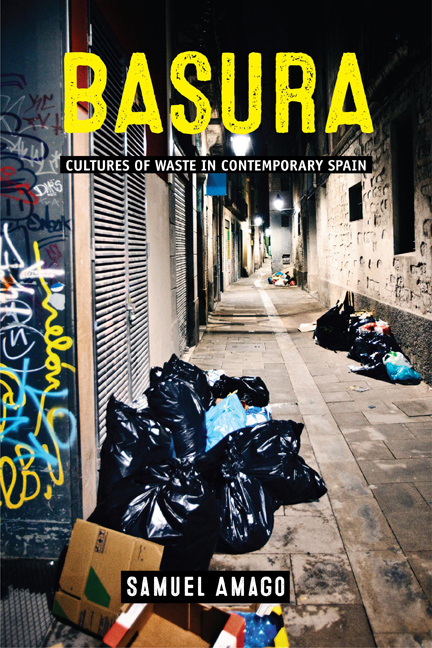
Basura
Katherine Singer Kovacs Prize - United States, (2022, Winner)
What makes trash trash? How do we decide what to throw away? Driven by these questions and others, Samuel Amago takes us through the streets and alleys of Spain, sorting through recycling bins, libraries, social media, bookstores, and message boards in search of things that have been forgotten, jettisoned, forsaken. Ranging in topic from the transformation of urban space during the transition to democracy to a twenty-first-century sanitation strike that paralyzed Madrid for weeks, from the films of Pedro Almodóvar to graphic novels about Spain’s housing crisis, Basura presents an alternative story of contemporary Spanish culture through the lens of wasted things.
Not merely an environmental problem, the proliferation of trash is an indicator of the social, political, and economic processes that undergird late, neoliberal capitalism. In chapters on cinema, photography, archaeology, drawing, comics, literature, ecology, and urban design, Amago places waste objects into dialogue with the cultural practices and structures of power that have produced them. Drawing from archaeological, ecocritical, and new materialist approaches, Amago argues that discards possess agency and generate an array of effects. Just as trash never fully disappears but returns to haunt its creators, so history never vanishes despite being buried or ignored by official narratives. Basura considers the efforts of artists, writers, and designers for whom waste is a means to withstand cultural erasure.
- Jessica A. Folkart, Virginia TechAn outstanding study of the production and representation of trash in contemporary Spain that provides an intriguing analysis of how society uses and refuses the material objects of everyday life.
- Maite Zubiaurre, UCLACultural archeology at its best, and an indispensable reflection upon the excretion frenzy that takes hold of Spanish contemporary reality, culture, and thought. Amago’s incisive and creative unearthing of the residues and waste products of democratic Spain sheds revealing light on the reasons behind the country’s uneven path towards modernization, but, even more important, provides the reader with new tools to engage with the 'ontology of trash' in all its philosophical, social, political, and cultural complexity.
- Ciberletras[W]hat is perhaps Basura’s most important achievement is that it manages to show how waste and its attending discourses are at the center of our individual and social lives. Understanding this is a pressing matter in Spain and everywhere else, and Amago’s book can help us think through more ethical ways to deal with the trash we make.
Samuel Amago is Professor of Spanish at the University of Virginia and coeditor of Consequential Art: Comics Culture in Contemporary Spain, among other books.
1. Pedro Almodóvar’s Modern Projections
2. Trash, Culture, Democracy in Contemporary Madrid
3. Junkspace Photography
4. Archaeological Fiction
5. Comics Perspectives on Spanish Crisis
6. Words and the Wasting Self in Rosa Montero’s Fiction
Conclusion: Two Plastic Things

