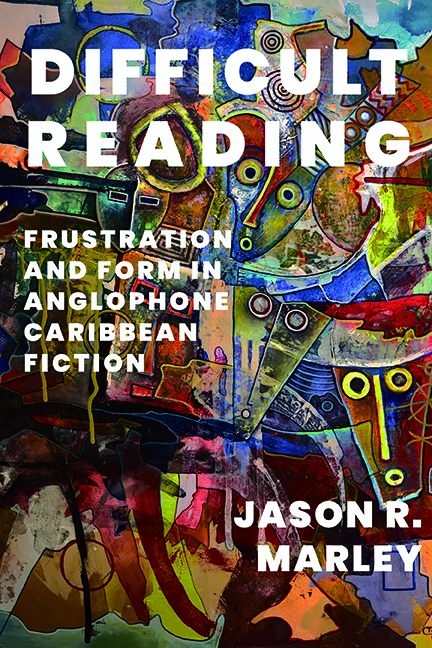
Difficult Reading
Frustration and Form in Anglophone Caribbean Fiction
Jason R. Marley
Series:
subjects:
Difficult Reading offers a new approach to formal experimentation in Caribbean literature. In this insightful study, Jason Marley demonstrates how the aggressive, antagonistic elements common to the mid-twentieth-century Caribbean novel foster emotional responses that spark new forms of communal resistance against colonial power.
Marley illustrates how experimental Caribbean writers repeatedly implicate their readers in colonial domination in ways that are intended to unsettle and discomfort. In works such as Denis Williams’s The Third Temptation, Wilson Harris’s The Secret Ladder, and Vera Bell’s overlooked prose poem Ogog, acts of colonial atrocity—such as the eradication of Indigenous populations in Guyana, the construction of the Panama Canal, or the disenfranchisement of Afro-Jamaican communities—become mired in aesthetic obfuscation, forcing the reader to confront and rethink their own relationship to these events. In this way, new literary forms engender new forms of insight and outrage, fostering a newly inspired relation to resistance.
- Njelle Hamilton, University of Virginia, author of Phonographic Memories: Popular Music and the Contemporary Caribbean NovelDifficult Reading promises to enrich critical Caribbean studies with nuanced, original readings of texts and authors often considered too difficult for readers and critics alike to make sense of. Its enduring legacy will be to suggest ways that such opacity might be productively read, not as an appropriation of modernist techniques, but as a literary aesthetic that arises from the region’s experience of colonization, an aesthetic that eschews realism, linearity and resolution in order to draw attention to the ‘historical aporias,’ traumas, and continued epistemic violence that mark the Caribbean space.
Jason R. Marley is Associate Professor of English at Francis Marion University.

